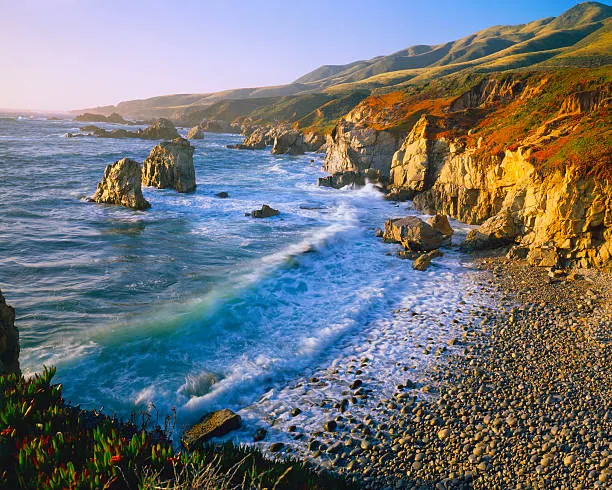
Monterey County has always attracted people who see the world differently. The rugged coastline, the wide valley, the particular quality of Central Coast light — something about this place has called to writers for more than a century, pulling them here to work out their ideas and find their voice. The literary legacy they left behind is woven into the very geography of the county.
John Steinbeck — Born in Salinas, Shaped by the Valley
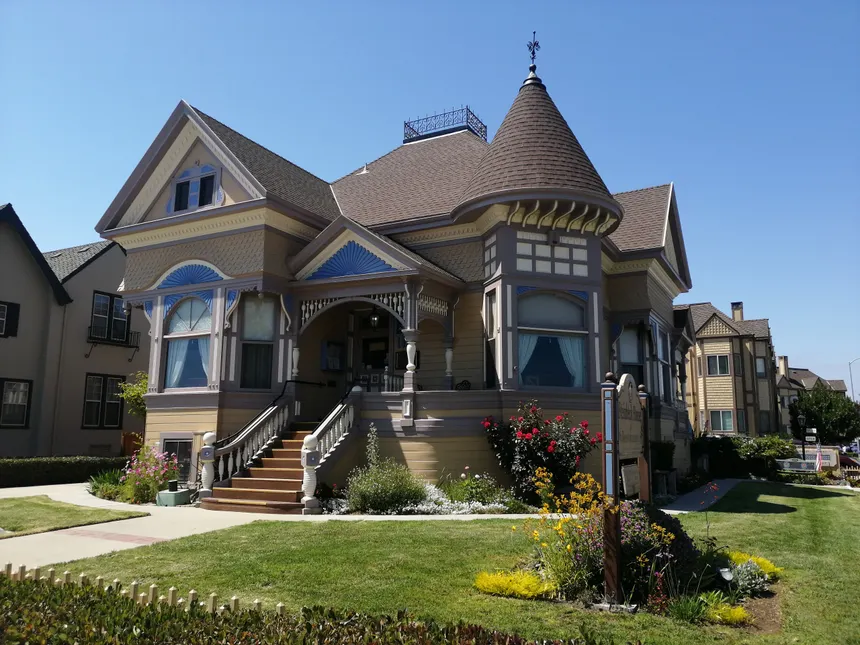
No writer is more inseparable from Monterey County than John Steinbeck. Steinbeck was born on February 27, 1902, in Salinas, California, about 30 miles from Cannery Row. He graduated from Salinas High School in 1919 and later lived in Pacific Grove next to Cannery Row, where much of the material for his books was gathered.
His summers were spent immersed in farm work on the ranches of the rolling fields and hills of Monterey County. Life by the bay was vibrant and colorful, rich with the customs of the many cultures who had settled the area. Those early years working alongside migrant laborers in the Salinas Valley gave him the raw material for some of the most important American novels of the twentieth century.
During his writing career he authored 33 books, including 16 novels. He is widely known for the comic novels Tortilla Flat and Cannery Row, the multigenerational epic East of Eden, and the novellas The Red Pony and Of Mice and Men. The Pulitzer Prize–winning The Grapes of Wrath is considered his masterpiece and part of the American literary canon.
He won the Nobel Prize for Literature in 1962. His ashes were returned to Salinas, buried at the Garden of Memories Cemetery. The area around Salinas and Monterey is now commonly called Steinbeck Country — and rightly so. The National Steinbeck Center in downtown Salinas and the Victorian home where he was born on Central Avenue are open to visitors year-round.
Robinson Jeffers — The Poet Who Built His Own Castle
If Steinbeck is the voice of the Salinas Valley, Robinson Jeffers is the soul of the Carmel coast. In 1914, when he and his wife Una first saw the unspoiled beauty of the Carmel–Big Sur coast, Jeffers knew they had found their "inevitable place."
What followed was one of the most extraordinary acts of devotion to a landscape in American literary history. Construction of Tor House began in 1919 with Jeffers acting as the stonemason's apprentice, hauling granite boulders from the beach below using heavy ropes and horses. With the skills he learned, Jeffers then began work on Hawk Tower in 1920, completing it in 1924. The tower stands forty feet high, built entirely by his own hands, stone by stone.
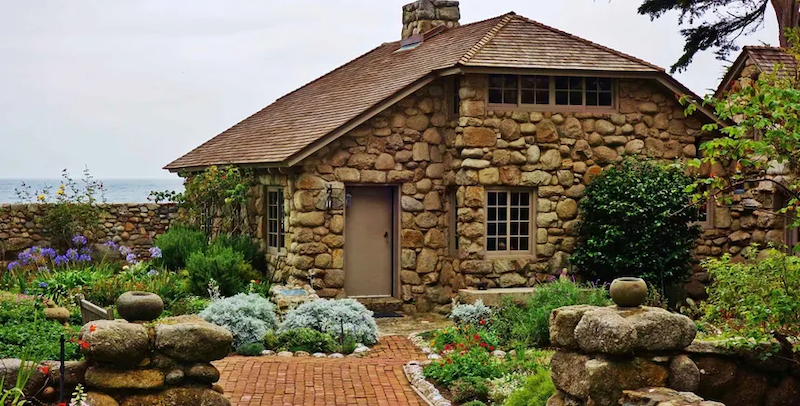
Almost all of Jeffers's writing was done at Tor House. The family entertained many influential literary and cultural celebrities there, among them Sinclair Lewis, Edna St. Vincent Millay, Langston Hughes, Charles Lindbergh, George Gershwin and Charlie Chaplin.
In 2024 the property was designated a National Historic Landmark. Tor House is open for docent-led tours on Fridays and Saturdays — one of the most remarkable literary sites in California.
Jack Kerouac — Big Sur and the Breaking Point
Jack Kerouac came to Big Sur not in triumph but in crisis. By the early 1960s the author of On the Road was famous, alcoholic and overwhelmed by the life his book had created. He retreated to a cabin in Bixby Canyon borrowed from his friend Lawrence Ferlinghetti, seeking solitude and sobriety in the wilderness of the Big Sur coast.
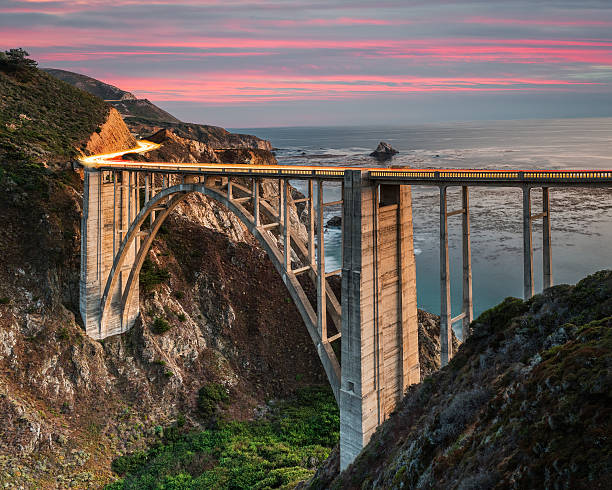
What he found instead was a breakdown — and a book. Big Sur, published in 1962, is a raw and harrowing account of those months in Bixby Canyon, the sounds of the creek and the ocean woven throughout as both comfort and menace. It remains one of the most honest accounts of creative collapse ever written, and the canyon and coastline Kerouac described are still essentially unchanged today.
Robert Louis Stevenson — An Early Visitor, a Lasting Mark
In the late 19th century, when a vibrant and thriving artist community sprang up in Carmel, literary luminaries such as Robert Louis Stevenson found respite here. Stevenson came to Monterey in 1879, following the woman who would become his wife across the Atlantic. He spent several months in the area, walking the coastline and writing, and the landscape left a clear mark on his imagination. The Point Pinos lighthouse at Pacific Grove is widely believed to have inspired the lighthouse in Treasure Island.
Jack London — A Regular Visitor to the Peninsula
Jack London was drawn to Carmel's early bohemian community in the first decade of the twentieth century, spending time among the artists and writers who had gathered around the bay. The rugged outdoors that defined his fiction was all around him here, and the camaraderie of Carmel's early creative colony suited a writer who worked hard and lived harder.
A County That Shaped American Literature
What's striking about this list is not just the names but the depth of connection. These writers didn't pass through Monterey County — they put down roots, built homes, raised families and did their most important work here. Steinbeck's Nobel Prize, Jeffers' National Historic Landmark, Kerouac's most personal novel — all of it grew from this soil, this light, this coast.
Next in our series — Part 2: Artists and Visionaries — Ansel Adams, Edward Weston, Salvador Dali and Frank Zappa.


Comments (0)
Leave a Comment